
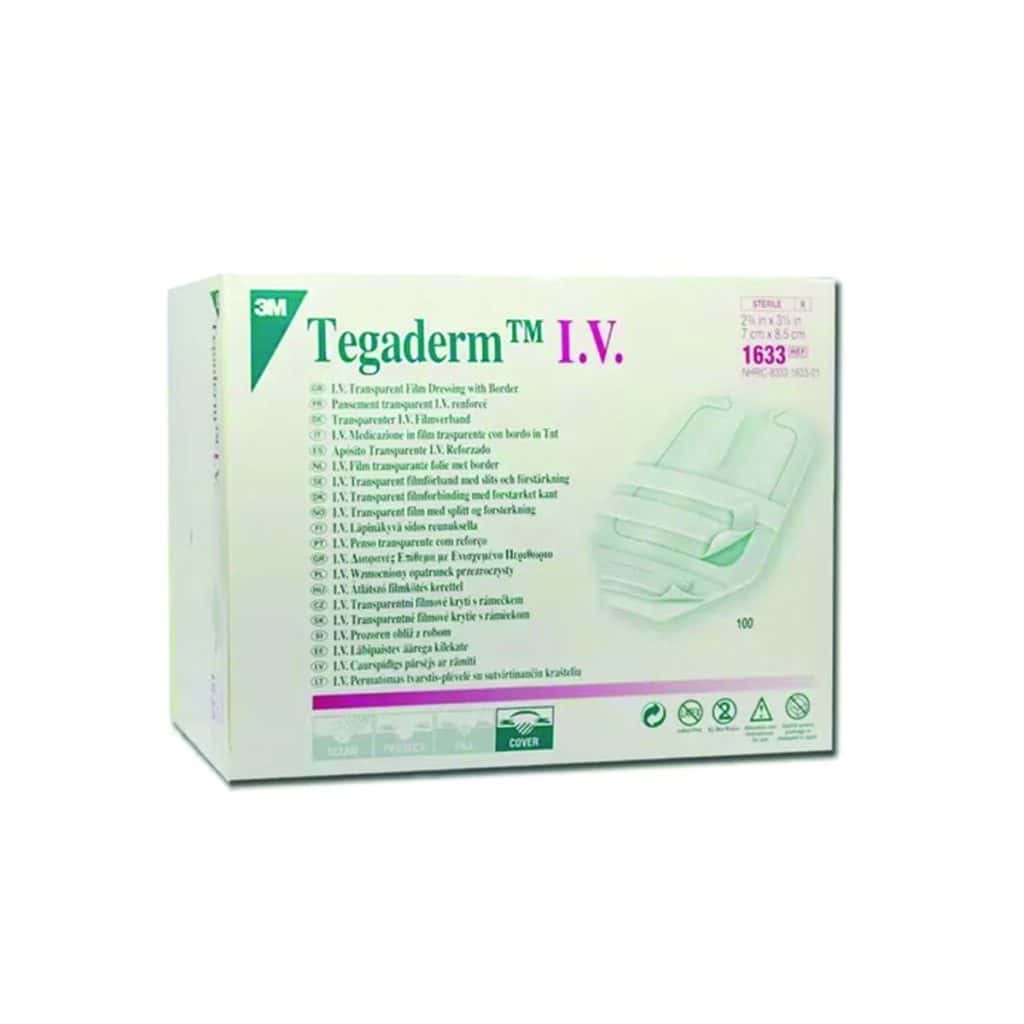
Tegaderm Transparent Film Dressing
SKU:DM51150
Call for Price - (877) 593-6011Being able to see a catheter insertion site without peeling anything back is the whole reason a transparent film dressing gets used over the site instead of gauze and tape. That matters most in the first hours after placement, when early signs of a problem – swelling, redness, a dislodged catheter – are easiest to catch by looking rather than by unwrapping. The thin film still holds securely on fur-adjacent skin and moves with the patient instead of tenting.
Related Products
Watching a Catheter Site Without Ever Uncovering It
A gauze-and-tape dressing hides exactly the thing staff most need to check on repeatedly – whether the insertion site looks normal. A transparent film dressing solves that by staying in place while remaining fully visible, so a quick look during rounds or a treatment pass is enough to catch early swelling, discharge, or a catheter that's started to migrate. The thin, conformable film also holds up better than it might seem on skin near a haircoat, moving with the limb instead of lifting at the edges the way a stiffer dressing can. That combination of visibility and adherence is a genuinely useful teaching point when walking students through catheter-site care, not just dressing application.Media and documents will be available soon. Contact us at (877) 593-6011.
Stay Up to Date on Products
Get Emails from VetiSimLab