
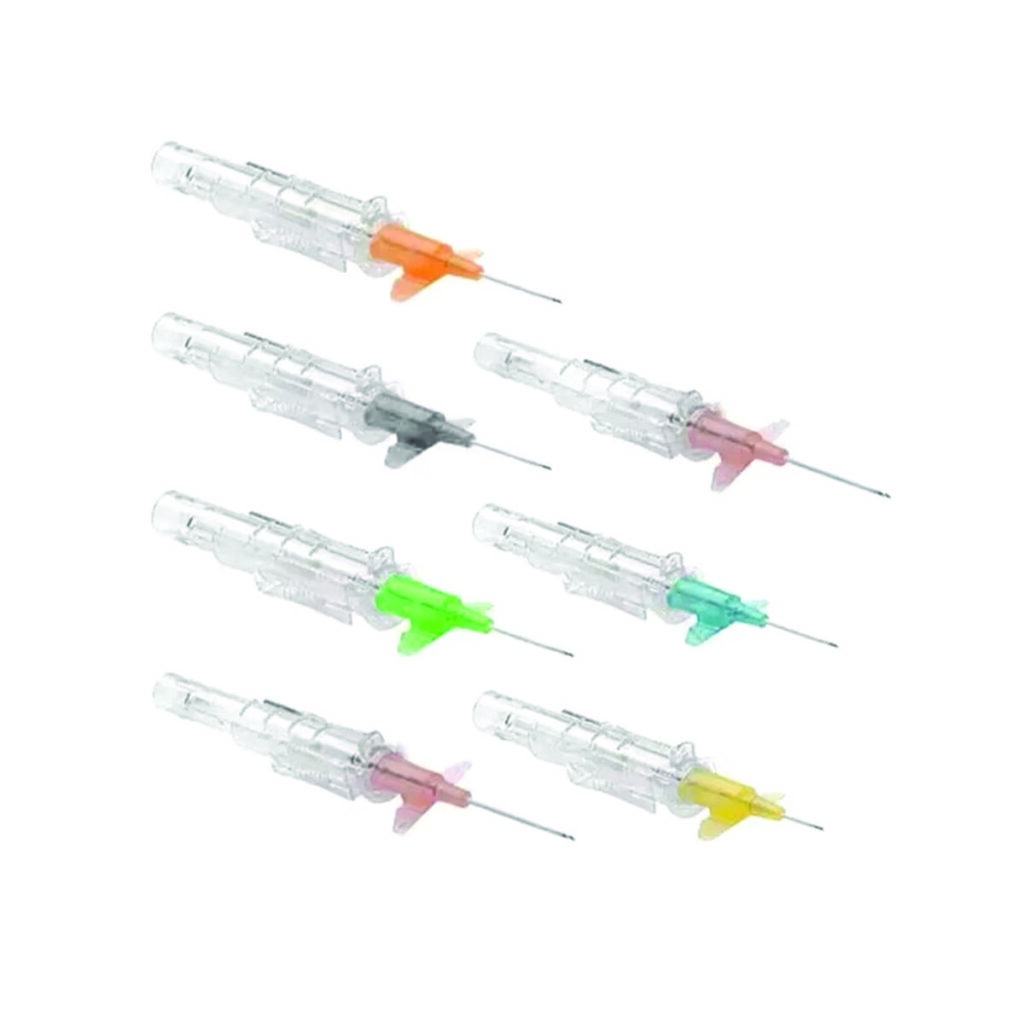
ProtectIV Winged IV Safety Catheter
SKU:DM50990
Call for Price - (877) 593-6011The needle doesn't shield itself until it's already out of the vein, which is the point: nothing extra to activate mid-stick, just a passive mechanism that encases the point the instant it's withdrawn. Wings give a flat, tape-friendly surface for securing the hub on a patient who won't hold a limb still, whether that's a squirming kitten or a horse shifting weight on three legs. Because peripheral catheters go into vessels of very different sizes, gauge and length should be matched to the specific patient and vein rather than to one default pack.
Related Products

The Safety Feature That Waits Until the Needle Is Already Out
Most needlestick injuries with peripheral catheters happen in the seconds after the vein is accessed, not during insertion, which is why the shielding on this catheter is timed to the withdrawal step rather than a separate button or slide the inserter has to remember under pressure. That timing matters more in a busy treatment area where the person placing the line may also be restraining the patient, drawing blood, or fielding a phone call mid-procedure. The winged hub is a small detail with outsized use in practice: it gives a flat surface for tape or a securement dressing on limbs that are thin, furred, or simply too mobile for a bare catheter hub to stay put. That comes up constantly in exotics and small mammal work, but it's just as relevant on a fractious cat or a foal that hasn't learned to stand for venipuncture yet. Because this is a real peripheral IV device, gauge and length selection should follow normal clinical judgment about vessel size, flow needs, and the medication or fluid being run – not a species assumption. It's also a reasonable catheter to keep on hand for vet tech skills labs teaching aseptic placement technique, since the shielding mechanism itself is worth walking students through.Media and documents will be available soon. Contact us at (877) 593-6011.
Stay Up to Date on Products
Get Emails from VetiSimLab